
Desoldering Wick
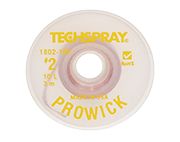
Desoldering Wick for Clean, Precise Solder Removal
Desoldering wick, also known as solder braid, is a woven copper mesh used to remove excess solder from electrical connections, circuit boards and component leads. When heated with a soldering iron, the braid quickly absorbs molten solder through capillary action, enabling clean and efficient desoldering without damaging nearby components or PCB pads.
Technicians and electricians rely on desoldering wick for tasks such as reworking surface mount components, correcting solder bridges, and clearing through-hole pads during repair or assembly. High-quality wick material improves heat transfer and wick-up performance, reducing the risk of overheating sensitive parts while ensuring thorough solder removal. Choose the right width and copper grade for your application to match the size of joints and the amount of solder to be removed.
Browse our selection of desoldering wick products for reliable solder removal in electronics maintenance, prototyping and industrial repair projects.
Frequently Asked Questions
What width of desoldering wick should I choose?
The correct wick width depends on the size of the solder joint and the amount of solder present. Narrow braid is typically used for fine-pitch surface mount work, while wider wick is better for larger through-hole joints and heavier solder deposits.
Can desoldering wick be used for removing solder bridges on surface mount devices?
Yes, desoldering wick is frequently used to eliminate solder bridges between closely spaced pins on surface mount components. Proper technique helps remove excess solder cleanly while minimizing heat exposure to sensitive devices.
What tools are typically used alongside desoldering wick?
Desoldering wick is most effective when paired with a temperature-controlled soldering iron and quality soldering materials. Using the right heat level improves solder absorption and reduces the risk of lifting pads or overheating nearby components.