
Triacs
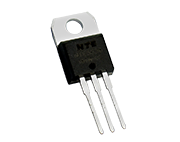
Triacs for AC Switching, Phase Control, and Load Regulation
Triacs, also commonly written as TRIACs, are three-terminal semiconductor devices used to control AC power. The name comes from "triode for alternating current," which reflects their ability to conduct alternating current in both directions. Because they can conduct during both halves of an AC waveform, triacs are widely used for AC load switching and power control in applications such as lighting dimmers, heater controls, small motor speed controls, and appliance control circuits.
In practical applications, triacs provide a compact solid-state solution for controlling the average power delivered to a load. By adjusting when the triac turns on during each AC cycle, the circuit can regulate output power through phase control. This makes triacs useful in systems where variable AC output is needed, such as adjusting lamp brightness, controlling heating element output, or regulating the speed of compatible AC motors.
Triacs are commonly selected for applications that require bidirectional AC switching without the need for separate devices for each half-cycle. They are similar to SCRs in that both belong to the thyristor family, but SCRs conduct in one direction while triacs conduct in both directions.
When selecting a triac, key considerations include RMS on-state current, blocking voltage, gate trigger current, holding current, surge current rating, package style, load type, and thermal performance.
Proper triac selection helps ensure reliable AC switching, efficient load control, and long-term performance in electronic and industrial control circuits. Because triacs are sensitive to load characteristics, especially inductive loads such as motors and transformers, proper snubber design, heat sinking, and gate drive configuration should be considered during system design.
Frequently Asked Questions
What types of loads can triacs control?
Triacs are commonly used with resistive loads such as heaters and incandescent lighting, as well as some compatible AC motors. Inductive loads such as motors, transformers, and solenoids require careful triac selection and may need snubber circuits or additional protection.
Can triacs fail shorted?
Yes, triacs often fail shorted after severe overcurrent, overheating, surge events, or voltage transients. A shorted triac may leave the load permanently energized, which is why proper protection and troubleshooting are important.
How can I test a triac?
A triac can be tested with a multimeter for obvious shorts between main terminals, but full functional testing usually requires a circuit that can apply the correct gate trigger and load current. A shorted or open triac should be replaced with a compatible device.