
SCRs
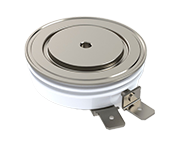
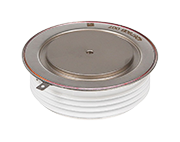
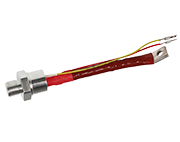
SCRs for Precision High-Power Switching
SCRs, or silicon controlled rectifiers, are solid-state semiconductor devices used to control current in high-power electrical circuits. An SCR functions as a one-way controlled switch, remaining off until a gate signal is applied and then conducting current from anode to cathode until current falls below the holding level. This controlled switching behavior makes SCRs well suited for rectification, power regulation, motor control, and industrial load switching.
In practical applications, SCRs are commonly used in power supplies, DC motor drives, soft starters, battery chargers, industrial heating controls, and high-voltage rectifier systems. Phase control SCRs are used to regulate power by controlling the point in the AC waveform where conduction begins, allowing precise adjustment of output voltage or power delivered to the load. Inverter applications may use SCR-based switching arrangements in power conversion systems where controlled current flow and high-voltage capability are required.
SCRs are also part of the broader thyristor family, which includes specialized devices such as gate turn off thyristors. Unlike standard SCRs, which typically turn off when current drops below the holding current, gate turn off thyristors can be turned off by applying a gate signal. This makes them useful in power electronics applications that require more direct control over both turn-on and turn-off behavior.
When selecting an SCR, key considerations include forward current rating, repetitive peak off-state voltage, gate trigger current, holding current, surge current rating, thermal performance, and package style. Proper heat sinking, circuit protection, and gate drive design are critical in high-power applications to ensure reliable operation and prevent premature device failure.
Frequently Asked Questions
What is the difference between an SCR and a diode?
A diode conducts automatically when forward biased, while an SCR requires a gate signal to begin conducting. This allows SCRs to provide controlled rectification and power regulation.
Can SCRs be connected in series or parallel?
Yes, but series connections require voltage sharing, and parallel connections require current sharing. Without proper balancing components and circuit design, one SCR may be overstressed and fail.
Do SCRs need regular maintenance?
Yes, maintenance for SCR-based systems typically includes checking heat sinks, terminals, gate wiring, cooling airflow, insulation, and signs of overheating or electrical stress. The SCR itself has no moving parts, but surrounding connections and thermal components should be inspected regularly.