
Line Reactors
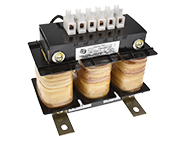
Line Reactors for Drive Protection and Power Conditioning
Line reactors are inductive components used in series with a power source or motor drive circuit to help manage current, reduce electrical stress, and improve overall power quality. In industrial systems, they are commonly used with variable frequency drives to limit inrush current, reduce harmonic effects, and help protect both the drive and connected motor from damaging electrical conditions. By smoothing current waveforms and adding impedance to the circuit, line reactors can also help reduce nuisance tripping and support more stable system operation.
Line reactors may be installed on either the line side or load side of a drive, depending on the type of protection needed. Line-side reactors are often used to help protect the drive from incoming voltage spikes and reduce harmonic distortion seen at the power source. Load-side reactors are typically used to help reduce voltage stress at the motor terminals and protect motor insulation, especially in applications with longer motor leads. The right selection depends on where the reactor will be installed, what problem it needs to address, and how the drive system is configured.
Galco offers line reactors for industrial motor and power applications where drive protection, waveform improvement, and equipment longevity are important. Choosing the correct reactor depends on voltage, current rating, impedance, installation point, and the demands of the overall system. Proper selection helps improve reliability, reduce electrical stress, and support longer service life for drives and motors across power and electrical systems.
Choosing the Right Line Reactor for the Application
Selection starts with where the reactor will be installed and what it needs to accomplish. A line-side reactor is typically chosen when the goal is to reduce incoming line disturbances, limit inrush current, or protect the drive from voltage-related issues. A load-side reactor is more often used when the focus is on protecting the motor from reflected wave effects, reducing peak voltage at the motor terminals, or helping manage long lead lengths between the drive and motor. Matching the reactor to the system voltage and current requirements is essential, but so is understanding the electrical behavior the application needs to control.
Operating conditions and drive configuration also influence the right choice. Motor lead length, drive type, source impedance, and overall system sensitivity can all affect how much impedance or filtering benefit is needed. In some applications, it may also make sense to compare line reactors with related power conditioning components such as DC link chokes or electronic filters depending on whether the issue is primarily on the AC input side, the drive bus, or the motor output side of the system.
Frequently Asked Questions
What does a line reactor do in a drive system?
A line reactor adds impedance to the circuit to help smooth current flow, reduce electrical stress, and improve power quality. In drive applications, it is commonly used to limit inrush current, reduce harmonic effects, and protect the drive or motor from damaging voltage conditions.
How do I choose the right line reactor?
Start by identifying whether the reactor will be installed on the line side or load side of the drive, then match it to the system voltage, current, and application requirements. It is also important to consider whether the goal is to protect the drive, protect the motor, reduce harmonics, or manage long motor lead effects.
What is the difference between a line-side reactor and a load-side reactor?
A line-side reactor is installed between the power source and the drive to help reduce incoming disturbances and protect the drive, while a load-side reactor is installed between the drive and the motor to help reduce voltage stress at the motor. The right choice depends on where protection and current conditioning are needed in the system.