
Isolators
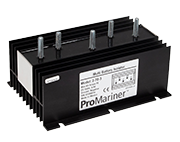
Battery Isolators for Power Separation and Battery Management
Battery isolators are used to manage power between multiple batteries while helping prevent one battery from discharging another. In industrial and mobile electrical systems, they are commonly used where separate batteries support different functions, such as starting power and auxiliary equipment. By keeping battery circuits separated while still allowing charging from a common source, battery isolators help improve system reliability and support better battery management.
Different battery isolator designs are used depending on how the system is configured and how power needs to be distributed. Some are selected to separate primary and auxiliary batteries, while others are used where charging control, current handling, and voltage drop need to be considered more closely. Battery isolators are commonly used in applications where protecting reserve battery capacity is important and where equipment must continue operating without draining the starting or primary battery.
Galco offers battery isolators for industrial electrical applications where multiple batteries or separate battery circuits need to be managed safely and effectively. Choosing the correct isolator depends on system voltage, current requirements, number of batteries, charging method, and the electrical demands of the application. Proper selection helps support battery life, maintain available power where it is needed, and improve overall system performance across power and electrical systems.
Choosing the Right Battery Isolator for the Application
Selection starts with the overall battery setup. The number of batteries in the system, the system voltage, and the amount of current that may pass through the isolator all affect which model is appropriate. It is also important to understand how the batteries are being used. Some systems need to protect a starting battery from auxiliary loads, while others are designed to keep backup or accessory circuits separated so power remains available where it is needed most.
Charging behavior and installation conditions should also be considered. The isolator needs to work with the charging source and the expected load profile without introducing issues that affect battery performance or available voltage. In some applications, battery isolators are used alongside related components such as batteries, power supplies, or other power management components depending on the design of the system.
Frequently Asked Questions
What does a battery isolator do?
A battery isolator keeps batteries electrically separated so one battery cannot discharge another, while still allowing charging in a shared system configuration. This helps preserve battery capacity and supports more reliable operation in systems with multiple batteries.
How do I choose the right battery isolator?
Start by matching the isolator to the system voltage, current requirements, and number of batteries in the application. It is also important to consider how the batteries are being charged and whether the isolator is being used to protect a starting battery, separate auxiliary loads, or manage backup power availability.
When is a battery isolator needed?
A battery isolator is typically needed when a system uses more than one battery and it is important to keep those batteries from draining each other. This is common in applications where one battery must remain available for starting, standby use, or other priority functions while another supports accessories or auxiliary equipment.