
Pulleys & Sheaves
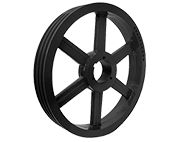
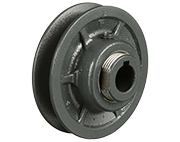
Industrial Pulleys and Sheaves for Belt Drive Power Transmission
Pulleys and sheaves are mechanical power transmission components used in belt-driven systems to transfer motion, adjust speed, and transmit torque between rotating shafts. These components are widely used in industrial machinery such as conveyors, fans, pumps, compressors, mixers, and material handling equipment, where reliable and efficient motion control is required.
In belt drive systems, pulleys function as rotating wheels with grooved or contoured surfaces designed to guide belts, cables, or ropes. As the driving pulley rotates, it moves the belt, which, in turn, rotates the driven pulley and the connected equipment. This mechanism allows power to be transmitted between shafts even when they are positioned at varying distances or orientations. Efficient belt-and-pulley systems provide smooth operation, reduced noise, and shock absorption compared to rigid mechanical transmission methods.
Sheaves are a specific type of pulley with a grooved profile that helps maintain belt alignment and tension. Properly selected sheaves support efficient power transfer, reduce mechanical stress on motors and bearings, and improve overall equipment reliability. Misalignment or improper sizing can lead to belt slippage, uneven wear, and reduced machine performance.
Different pulley designs are available to match various belt types and industrial power transmission requirements. V-belt pulleys are among the most common configurations, using trapezoidal grooves that help prevent slippage and increase torque transmission efficiency. Other pulley types may be designed for timing belts, flat belts, or variable speed applications, allowing engineers to optimize system performance based on load characteristics and speed ratios.
Proper pulley and sheave selection depends on shaft size, belt type, speed requirements, torque load, environmental conditions, and alignment considerations. Correct installation and maintenance help ensure efficient power transmission, reduce vibration, and extend the service life of industrial drive systems.
Frequently Asked Questions
What is belt wrap angle and why does it matter?
The wrap angle is the amount of belt contact around the pulley. Greater contact improves friction and torque transmission efficiency.
How do pulleys contribute to vibration reduction?
Belt drive systems absorb shock loads and damp vibration, helping protect motors, bearings, and connected mechanical components.
What maintenance is required for pulley and sheave systems?
Regular inspection for wear, proper belt tensioning, lubrication of bearings, and alignment checks help maintain efficient operation and prevent downtime.