
Gearmotors
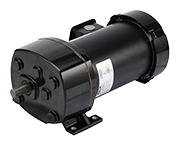
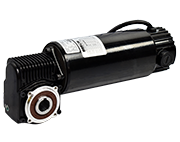
Industrial Gearmotors for Integrated Speed Reduction and Motion Control
Gearmotors are electromechanical drive units that combine an electric motor with an integrated gearbox to deliver controlled speed and increased torque output. By integrating a motor and gear reducer into a single assembly, gearmotors convert high-speed, low-torque motor output into lower-speed, higher-torque motion suitable for industrial machinery.
This integrated design simplifies installation, reduces the need for separate coupling and gearbox components, and allows more compact power transmission systems. Gearmotors are widely used in conveyors, material handling equipment, packaging machinery, lifting systems, and automated production lines where reliable low-speed, high-torque motion is required.
Industrial gearmotors are available in several configurations depending on the motor type and control requirements. AC gearmotors are commonly used in industrial environments because they provide reliable operation, efficient power conversion, and long service life. These gearmotors are often paired with variable frequency drives to enable adjustable speed control in automated systems.
DC gearmotors are typically used in applications requiring precise speed regulation, strong starting torque, or battery-powered operation. DC gearmotors allow speed adjustment through voltage control and are often used in robotics, positioning systems, and small automation equipment.
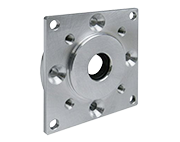
To support installation and long-term performance, gearmotor accessories are used to facilitate mounting, alignment, electrical integration, and maintenance. Accessories may include mounting hardware, adapters, connectors, and other components designed to ensure proper integration into drive systems.
Selecting the correct gearmotor requires consideration of torque requirements, gear reduction ratio, motor power rating, duty cycle, mounting configuration, and environmental conditions. Proper sizing and installation help ensure efficient power transmission, improved motion control accuracy, and long service life in industrial applications.
Frequently Asked Questions
What is a gear reduction ratio?
The gear reduction ratio represents the relationship between motor input speed and gearbox output speed. A higher ratio produces slower output speed and greater torque.
What types of gear systems are used in gearmotors?
Common gear systems include planetary, worm, helical, and spur gear configurations, each offering different torque capacity and efficiency characteristics.
How do gearmotors improve system efficiency?
By matching motor speed to load requirements, gearmotors allow equipment to operate at optimal torque levels while reducing mechanical strain and energy consumption.