
Temporary Lighting
Temporary Lighting for Construction and Industrial Worksites
Temporary lighting solutions provide portable illumination for environments where permanent lighting systems are not available or practical. These lighting systems are commonly used on construction sites, during maintenance activities, in industrial shutdowns, and in field work where reliable lighting is required to support safe and efficient operations.
Temporary lighting equipment is designed to be durable, portable, and easy to deploy in challenging environments. Many fixtures include protective cages, sealed housings, and heavy-duty cords that help protect lamps from impact, debris, moisture, and other harsh conditions commonly encountered on job sites and in industrial facilities.
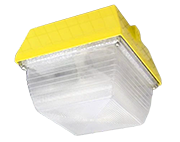
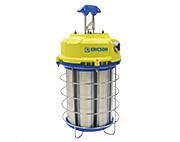
Several types of temporary lighting systems are available depending on the application and the size of the work area. Area lighting is commonly used to provide broad illumination across large work zones or construction areas. Bay lighting is often used in high-ceiling environments such as warehouses or industrial facilities where overhead lighting is required for temporary installations.
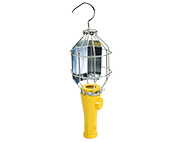
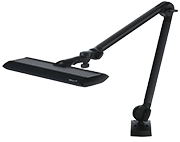
For more focused illumination, task lighting provides concentrated light for detailed activities such as equipment repair, inspection, or assembly work. Hand lamps offer a portable lighting solution that allows technicians and maintenance personnel to illuminate confined spaces, machinery interiors, or hard-to-reach areas during service operations.
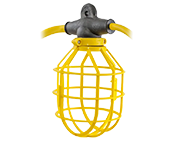
String lights consist of multiple lamps connected along a single cable and are often used to illuminate pathways, scaffolding, tunnels, or extended work areas where evenly spaced lighting is required.
Temporary lighting fixtures are available in a range of lamp types, wattage ratings, and cord lengths to meet specific job site requirements. By providing reliable portable illumination, temporary lighting systems improve visibility, enhance worker safety, and support efficient work in environments where permanent lighting infrastructure is not available.
Frequently Asked Questions
How is temporary lighting powered on job sites?
Temporary lighting systems are typically powered using portable generators, temporary electrical distribution panels, or standard AC power connections available at the job site. Many systems use heavy-duty extension cords and plug connections for quick deployment.
What safety considerations apply to temporary lighting?
Temporary lighting equipment should be designed for job site conditions and may include grounded power cords, protective cages, and weather-resistant housings. Proper installation and cable management help reduce electrical hazards and prevent damage to lighting equipment.