
Lamps
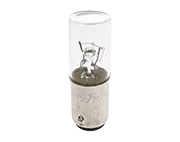
Lamps and Light Bulbs for Industrial Lighting Applications
Industrial lamps provide illumination for workspaces, machinery, equipment panels, and building interiors and exteriors where reliable lighting is required for productivity and safety.
Lighting lamps are available in many technologies, including incandescent, halogen, fluorescent,LED, and gas-discharge lamps. Each technology offers distinct advantages in brightness, energy efficiency, operating temperature, and service life. Selecting the right lamp depends on the lighting environment, the required illumination level, and energy-efficiency goals.
Incandescent lamps produce light by heating a tungsten filament with an electrical current. The filament is enclosed within a glass bulb that contains either an inert gas or a halogen gas mixture, which helps extend the filament's lifespan. While incandescent lamps are simple and widely compatible, many modern applications now favor more energy-efficient alternatives.
Gas-discharge lamps produce light by passing an electrical current through an ionized gas. Fluorescent lamps and germicidal lamps are common examples of this technology. These lamps are widely used in commercial and industrial facilities because they provide strong illumination while consuming less power than traditional incandescent lighting.
Lamps are manufactured in a wide variety of shapes, base types, voltages, and brightness levels to support different lighting fixtures and applications. From small indicator lamps used in control panels and switches to larger lamps used in facility lighting systems, choosing the appropriate lamp ensures optimal visibility, energy efficiency, and long-term lighting performance.
Frequently Asked Questions
What voltage ratings are commonly available for industrial lamps?
Industrial lamps are manufactured in a range of voltage ratings depending on the application. Common voltages include 12V, 24V, 120V, and 277V systems used in commercial and industrial lighting. Selecting a lamp with the correct voltage rating is critical to ensure safe operation and compatibility with the lighting fixture and power supply.
What is the difference between luminous flux and luminous efficacy?
Luminous flux, measured in lumens, indicates the total amount of visible light produced by a lamp. Luminous efficacy measures how efficiently a lamp converts electrical power into light and is expressed in lumens per watt (lm/W). Higher efficacy means the lamp produces more light while consuming less energy.
What is the difference between rated life and L70 life?
Rated life refers to the expected operating life of traditional lamps before failure. For LED lamps, lifespan is often measured using L70 metrics, which indicate the number of operating hours before light output decreases to 70 percent of its original brightness. This measurement helps estimate long-term lighting performance.