
Heat Exchangers
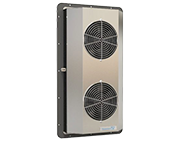
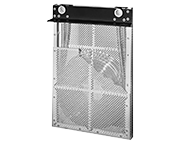
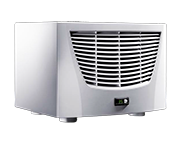
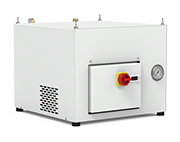
Heat Exchangers for Enclosure and Equipment Cooling
Heat exchangers are devices that transfer thermal energy from one fluid or air stream to another without direct contact between the two mediums. In enclosure and thermal management systems, they help remove internal heat while preserving environmental protection, allowing electronic and electrical equipment to operate reliably in extreme or demanding conditions.
Unlike direct ventilation systems, heat exchangers maintain enclosure seals and ratings by transferring heat through a barrier. This makes them especially useful in applications where contaminant exclusion, moisture control or ingress protection is required. Heat exchangers are compatible with a variety of industrial setups, including control panels, automation systems and machinery housings.
Common heat exchanger types include air-to-air heat exchangers, which transfer heat between internal and external airstreams; water-to-air heat exchangers, which use a liquid coolant loop; and water-to-water heat exchangers for closed fluid systems. Each type offers distinct advantages depending on available utilities, installation constraints and heat load requirements.
Heat exchangers can also incorporate heating and cooling coils that deliver additional thermal control by conditioning incoming air or fluid. These coil systems are useful when internal temperatures must be maintained within a specific range regardless of external conditions.
Effective heat exchanger selection depends on factors such as heat load, ambient conditions, available utilities, and enclosure configuration. By transferring internal heat to a separate medium, heat exchangers help maintain stable temperatures without compromising enclosure protection, making them ideal for dust-sensitive, sealed, or rugged environments.
Frequently Asked Questions
Can heat exchangers be used for both heating and cooling?
Yes. Systems that incorporate heating and cooling coils can support both functions. These configurations are useful in environments where enclosures must be protected from overheating in warm conditions and condensation or freezing in colder temperatures.
How is heat load calculated when sizing a heat exchanger?
Heat load is calculated by summing the power dissipation of all components inside the enclosure, typically expressed in watts. This includes PLCs, drives, power supplies, transformers, and other heat-generating devices. Accurate heat load calculation is critical to selecting a heat exchanger with sufficient capacity to maintain safe internal temperatures.
How do ambient temperature conditions affect heat exchanger performance?
Heat exchanger efficiency depends on the temperature difference between the enclosure interior and the cooling medium. Higher ambient temperatures reduce the ability to reject heat, which may require a larger exchanger or an alternative cooling method such as air conditioning in high-heat environments.