
Shrink Tubing
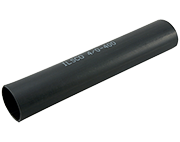
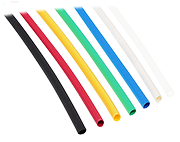
Shrink tubing, or heat-shrink tubing, is a shrinkable plastic tube used to insulate wires. Shrink tubing protects wires from abrasion and other damage, and provides environmental sealing for stranded and solid wire, conductors, connections, and terminals.
Shrink tubing is ordinarily made of nylon, which shrinks radially and not longitudinally when heated. This reduces the tube's diameter without affecting its overall length. Nylon can be treated with chemical additives and manufactured thicker or thinner to meet the requirements of most environmental conditions.
Shrink tubing is fitted to wires and slid over connections before shrinking. Using this method, shrink tubing can be used to repair insulation, bundle wires together, and seal connections. It is available in a wide variety of colors to aid with cable management, and some designs may include adhesive on the inside of the tube to provide a better seal.
Types of Heat Shrink Tubing and Material Options
Industrial heat shrink tubing is available in several material constructions depending on performance requirements:
- Polyolefin tubing for general purpose insulation and abrasion protection
- Adhesive-lined tubing for moisture sealing and environmental protection
- High temperature tubing for applications near motors, drives, or heat sources
- Chemical-resistant tubing for exposure to oils, solvents, or industrial fluids
- Thin wall and heavy wall tubing depending on mechanical protection needs
Key Selection Criteria for Heat Shrink Tubing
Choosing the right heat shrink tubing depends on several technical factors:
- Shrink ratio, which determines how tightly the tubing contracts over connectors or splices
- Diameter range, ensuring proper fit before and after shrinking
- Voltage rating, based on insulation requirements for the circuit
- Operating temperature range, especially in high heat industrial environments
- Environmental sealing needs, including moisture or chemical exposure
- Application type, such as wire harness protection, connector insulation, or splice reinforcement
Heat shrink tubing that matches these requirements helps improve electrical safety, reduce downtime, and support reliable long term wiring performance.
For structured termination inside enclosures, heat shrink tubing is often used with terminal blocks to maintain organized and serviceable wiring layouts.
Frequently Asked Questions
What shrink ratio should I choose for heat shrink tubing?
Shrink ratio defines how much the tubing contracts when heated. Higher shrink ratios are used when covering irregular shapes or connector transitions, while lower ratios are suitable for standard wire insulation applications.
Can heat shrink tubing provide moisture sealing?
Yes. Some heat shrink tubing types include adhesive lining that seals against moisture intrusion when heated, making them suitable for outdoor or harsh industrial environments.
Can heat shrink tubing be used for high voltage insulation?
Yes, but voltage rated heat shrink tubing must be selected based on circuit requirements. Tubing intended for high voltage applications is manufactured with thicker walls and higher dielectric strength to support insulation integrity.