
Cable Ties
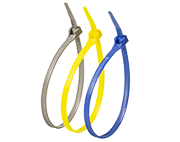
Cable ties are fastening components used to bundle, secure, and organize wires, cables, and harnesses in industrial wiring systems. By grouping multiple conductors into structured bundles, cable ties improve routing consistency, support airflow inside enclosures, and reduce the risk of accidental strain or abrasion.
In control panels, machinery, and automation systems, cable ties contribute to organized cable layouts that simplify maintenance and troubleshooting. They are commonly used alongside other products within the connectors and termination category, including cable clamps, cable protectors, and terminal blocks, to create durable and serviceable wiring paths.
Design Variants of Industrial Cable Ties
Industrial cable ties are available in multiple designs to suit different installation and environmental requirements. Standard nylon cable ties are commonly used for general-purpose bunding inside panels and equipment. Heavy-duty cable ties provide higher tensile strength for larger cable bundles or applications with vibration.
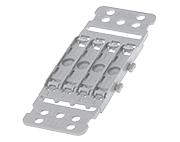
Releasable cable ties allow removal and reuse during servicing or system modifications. Mountable cable ties include integrated mounting features that secure bundles directly to panels or enclosures. Specialty cable ties are also available for environments requiring resistance to heat, flame, or ultraviolet exposure.
Frequently Asked Questions
How do cable ties impact cable insulation and jacket integrity?
Overtightening cable ties can compress insulation and damage cable jackets over time. Proper installation tension is important to secure the bundle without deforming conductors. Using appropriately sized ties helps maintain insulation integrity and electrical performance.
Do cable ties affect electromagnetic interference?
Cable ties do not provide shielding, but proper bundling and routing supported by ties can reduce unintended cable movement and contact. This helps maintain consistent spacing and may reduce interference risks when combined with proper cable separation practices.
Should cable ties be cut flush after installation?
Yes. Excess tie tails should be trimmed flush to prevent sharp edges that could damage insulation or pose a safety hazard during maintenance. Flush cutting improves safety and panel workmanship.