
Process Controllers
Industrial Process Controllers Maintain Temperature, Pressure, and Flow
Process controllers, often called PID (proportional-integral-derivative) controllers, are electronic devices that measure a process variable and adjust an output to keep that variable at a desired setpoint. In industrial systems they are used to regulate temperature, pressure, flow rate and other parameters by driving final control elements such as power controllers, control valves or variable-speed drives.
A process controller continuously reads signals from sensors, compares the measured value to the setpoint, and applies PID or other control algorithms to determine how much corrective action is needed. Its output can switch or modulate connected devices so heaters, valves, and other actuators respond smoothly to changes in the process. Many controllers include alarms, ramp-and-soak profiles, auto-tuning, and digital communications for integration with larger control systems.
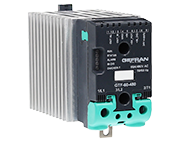
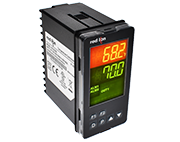
Galco's process control offering includes panel-mount and DIN-rail process controllers and power controllers, allowing designers and maintenance teams to match input type, control method, output type, and power rating to each heating or process control application.
Frequently Asked Questions
Can one controller manage multiple loops?
Some controllers support multiple loops or multivariable control functions for systems with linked process variables.
Do process controllers provide alarms or event notifications?
Many controllers include alarm outputs or event flags that can be used locally or sent to central systems for logging or operator alerts.
Can process controllers be used in hazardous environments?
Only controllers that are specifically rated for hazardous or classified areas should be used in those conditions. These units may include protective housings, intrinsically safe circuits, or other safety features designed to prevent ignition in flammable environments.
How often should a process controller be recalibrated?
Calibration frequency depends on the accuracy requirements of the application, environmental conditions, and manufacturer recommendations. Critical or high-precision processes may require periodic calibration, while general industrial applications may need calibration only during maintenance cycles or after sensor replacement.