
Control Relays
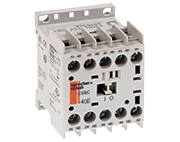
How Control Relays Work in Automation and Control Panels
Control relays are electrically operated switches used in automation and control panels to route and amplify low-power signals. They let a PLC, push button, limit switch, or sensor safely control multiple loads or downstream devices without carrying full motor or heater current through the control device itself.
A typical control relay has a coil, one or more sets of changeover contacts, and a compact enclosure that mounts on DIN rail or in a control cabinet. When the coil is energized, the contacts open or close to perform functions such as interlocking, status indication, seal-in circuit,s and simple logic.
Galco offers control relays for many applications, including motor starters, pump and fan control, material handling equipment, lighting panels, and machine tools. Choose from industrial control relays with multiple contact configurations and options for time delay, latching, and monitoring to match your voltage, current, and I/O requirements.
Browse our selection of control relays for general control-panel use, or explore overload relays, including electronic overload relays and thermal overload relays, when you need motor protection and trip functions.
Frequently Asked Questions
How do I choose the right coil voltage for a control relay?
Coil voltage should match the control circuit that will energize the relay. Common coil voltages include 24 VDC, 24 VAC, 120 VAC, and 230 VAC. Consider the stability of the supply, inrush characteristics, and any voltage drop that may occur over wiring distance. Choosing the correct coil voltage ensures consistent actuation and prevents nuisance dropout.
What contact configurations are most common in industrial control relays?
The most common configurations are form A (normally open), form B (normally closed), and form C (changeover). Industrial relays often provide several poles to support multiple independent circuits. Selection depends on the control system's logic requirements, whether the relay must make, break, or alternate between circuits.
What factors determine the electrical life of a control relay?
Electrical life is influenced by the type of load being switched, the current rating, switching frequency, contact material, and environmental conditions. Inductive loads, such as solenoids or motor coils, reduce relay life more quickly due to higher inrush and back EMF. Proper suppression devices or snubbers can greatly extend relay lifespan in these applications.